
Gifts She ACTUALLY Wants
This gift guide is curated by the Evora girls for the girls in your life. Don't guess on what she wants anymore, get her a gift she will use and love well beyond the holiday season. PS, links are included to shop!
This gift guide is curated by the Evora girls for the girls in your life. Don't guess on what she wants anymore, get her a gift she will use and love well beyond the holiday season.
For the fashion forward girl:
Nuuly Subscription- Nuuly Rent is about discovering something new, loving something you never expected and surprising yourself in the best possible way. It's about getting creative with what you wear every single day—not just on special occasions.
For the jewelry lover:
Union Studio- Union Studio is a locally owned shop featuring the work of over 150 St. Louis artists. Our thoughtful, classic collection of hand-crafted goods and fine art showcases the work of our neighbors. Opened in 2014 on Tower Grove Avenue, we now have two brick & mortar stores located in Botanical Heights and Webster Groves. Our aim has always been to provide a warm welcoming space where you can connect with local makers’ high-quality work and celebrate the creatives in our community.
For the interior decorator:
Lusso Boutique- Lusso is a hip little lifestyle store tucked away in the st louis suburb of clayton, mo. an emporium, a mercantile, the world's smallest department store. Whatever you call us, we think you'll love shopping here, and online. repeatedly voted the 'best gift shop in st louis', we offer a fabulous array of home decor, jewelry, clothing and gifts from your favorite designers. and we're happy to pack it all up and top it off with our signature gift wrap. complimentary, of course!
For the flower lover:
Rudy’s Flower Truck- We build custom bundles made with love right here in St. Louis, from our hands to yours. Blooms never go out of style, so let’s have some serious fun.
For the skincare junkie:
Facial with Lindsey at Evora- Feel good facials that will have your skin glowing all day long. Waxing services to get you smoother than ever. Microneedling to get rid of fine lines, wrinkles, acne scars, and skin discoloration! Plus, lash and brow services so you can skip the make-up!

Embracing Pleasure: Exploring the Health Benefits of Masturbation for Women
Masturbation is healthy! Discover the Myriad Advantages of Self-Exploration. Renowned expert, Dr. Becky Lynn, expertly guides women through the health benefits that self-pleasure brings to enhance both your physical vitality and psychological equilibrium.
Masturbation is a natural and empowering aspect of human sexuality that has long been surrounded by stigma and misconceptions. However, understanding its positive effects on women's health and well-being can lead to a more informed and open conversation. In this blog, we will delve into the health benefits of masturbation for women, shedding light on its potential advantages and promoting a healthier perspective on self-pleasure.
Stress Reduction and Mood Enhancement
Just like with men, masturbation for women triggers the release of endorphins and dopamine, often referred to as "feel-good" hormones. These chemicals contribute to a reduction in stress and an improved mood. Engaging in regular self-pleasure can help alleviate feelings of anxiety, tension, and promote a sense of relaxation and well-being.
Better Sleep Quality
The release of endorphins and the overall relaxation that often accompanies masturbation can promote better sleep quality. Many women report feeling more relaxed and at ease after orgasm, which can contribute to falling asleep faster and experiencing more restful nights.
Sexual Awareness and Comfort
Masturbation provides an opportunity for women to explore their bodies, understand their sexual responses, and discover what feels pleasurable. This self-awareness can lead to improved sexual satisfaction with a partner, as well as increased comfort in communicating desires and needs.
Pelvic Floor Health
Masturbation involves the engagement of pelvic floor muscles, which can have positive effects on their tone and strength. Strong pelvic floor muscles contribute to better bladder control, improved sexual function, and support for overall pelvic health.
Menstrual Pain Relief
Some women find that orgasm can provide temporary relief from menstrual cramps. The release of endorphins and the muscle contractions during orgasm can help alleviate pain and discomfort associated with menstruation.
Immune System Boost
Similar to men, women can experience immune system benefits from the stress-reducing effects of masturbation. Lower stress levels contribute to a healthier immune response, aiding the body in fighting off infections and illnesses more effectively.
Positive Body Image
Masturbation allows women to embrace and appreciate their bodies as sources of pleasure and well-being. This can contribute to a positive body image and increased self-confidence.
Myths and Considerations
Addressing misconceptions is important. Masturbation does not lead to infertility, affect virginity status, or have any inherently negative effects on a woman's health. It's a normal and healthy aspect of human sexuality that can be explored safely and comfortably.
Masturbation is a natural and pleasurable activity that offers a range of health benefits for women. From stress reduction and improved mood to pelvic floor health and menstrual pain relief, the advantages are numerous. Self-pleasure can be a positive and empowering way for women to connect with their bodies and enhance their overall well-being. Open conversations about sexual health and behaviors with healthcare professionals can provide additional insights and guidance tailored to individual needs and preferences.

Should I be taking collagen?
Collagen - what the heck is it? And is it worth spending money on supplements?
On a recent trip to the grocery store, I was offered a sample of a collagen peptide supplement that tasted good enough for me to purchase the $20 tub. Not knowing if I was doing something good for my body, or just for the manufacturer’s bottom line, I thought I'd take a deep dive into what exactly is collagen and whether it’s worth paying for supplements.
Collagen - what the heck is it? And is it worth spending money on supplements?
On a recent trip to the grocery store, I was offered a sample of a collagen peptide supplement that tasted good enough for me to purchase the $20 tub. Not knowing if I was doing something good for my body, or just for the manufacturer’s bottom line, I thought I'd take a deep dive into what exactly is collagen and whether it’s worth paying for supplements.
So, what exactly IS collagen?
I learned that collagen is the superhero protein that keeps our skin supple, our muscles strong, and our bones rock-solid. Collagen makes up a whopping 30% of your body's protein. It's the structural support system that holds your skin, muscles, bones, and connective tissues together in a tight embrace.
I also learned that as the number of birthday candles increases each year, the level of collagen in the body decreases. Thinner and weaker collagen fibers can lead to saggy skin, hallowing in places we don't want it, and can even cause joint aches. All this makes it enticing to want to replace some of that lost collagen with supplements and creams.
But does it work?
According to Harvard T.H. Chan School of Public Health, some randomized controlled trials have found that collagen supplements improve skin elasticity. Other trials have found that the supplements can improve joint mobility and decrease joint pain such as with osteoarthritis or in athletes. However, most if not all of the research on collagen supplements are funded or partially funded by related industries that could benefit from a positive study result, or one or more of the study authors have ties to those industries. This makes it difficult to determine how effective collagen supplements truly are and if they are worth their often hefty price.
Skin creams and serums that list collagen as an ingredient have also gained popularity in recent years. However, collagen is not naturally found on the skin’s surface and research has not supported that even the shorter chains of collagen, called peptides, can penetrate deep enough into the skin to where it would be beneficial.
Is there anything you can do to slow the inevitable loss of collagen?
Although you can’t increase the level of collagen in your body, you can help your body produce more by having a healthy lifestyle, so essentially you can slow down the rate of decline. Eating foods like oranges, broccoli, nuts, and dark chocolate provide the raw ingredients needed to support your body's collagen production.Also, make sure you are eating adequate amounts of protein from foods like poultry, fish, beans, and eggs. Bone broth is also known for its beneficial effects. However, some can contain toxic metals like lead, and the nutritional benefit varies depending on how it’s made. For me, I’ll probably opt to spend a little extra on bone broth in hopes that it would make it through a metal detector.
And just like so many other things in life, stay away from the bad stuff–smoking, excessive sugar and carbs, too much sun, and lack of sleep and exercise. These things are sure-fire ways to increase the rate of collagen loss.
The bottom line
So there you have it, the jury is still out on whether supplements have any unbiased scientific evidence that they work, so if it makes you feel better, I say go for it! Just be mindful that the reason why the supplement may taste good is because of all the added sugar, which could possibly counteract the beneficial effect? 🫤And, it’s probably safe to say you can skip the creams and serums and opt for a less-expensive potion and instead use that money for more fruits and veggies!
How to Stop the Hot Flashes
The most effective way to relieve the discomfort of hot flashes is to take estrogen. Estrogen replacement has a whole host of other benefits in the body. It is good for the vagina, the bladder, the bones, the skin, the hair and the nails. It is not the only option though. Other medicines, like Veozah, are FDA approved to treat hot flashes too.
Is it a Hot Flash or a Hot Flush? Either way, it SUCKS!
Alright, let's dive into the wonderful world of the internal inferno that is often included in the package deal that women get to experience as they bid farewell to their reproductive years as part of going through menopause.
First things first, hot flushes are just another way of saying hot flashes.
So, what exactly is going on during a hot flash? As women age, they experience a decrease in estrogen, which, among other things, cause the body's thermostat (hypothalamus) to become more sensitive to slight changes in body temperature. When the hypothalamus thinks the body is too warm, it starts a chain of events — a hot flash — to cool it down. So, you don’t have to be Dr. Quinn, Medicine Woman, to figure out if you have hot flashes, you likely have low estrogen, (although there are other rarer causes of hot flashes).
These hot flashes can last anywhere from a few minutes to what feels like an eternity of 10 minutes. And just when you think it's over, you're hit with a sudden chill, leaving you shivering like a wet puppy. The intensity of these hot flashes can range from a mild sensation of warmth to an inferno that would put the sun to shame.
And to make matters worse, some women have to deal with these fiery episodes in their sleep, waking up in the middle of the night drenched in sweat.
But fear not, my fellow hot flash sufferers, for there are ways to combat these infernal episodes, both medically and non-medically.
The most effective way to relieve the discomfort of hot flashes is to take estrogen. Replacing estrogen will knock out those flashes because you are replacing what your body is now missing that causes them in the first place. Estrogen replacement has a whole host of other benefits in the body. It is good for the vagina, the bladder, the bones, the skin, the hair and the nails. For some women, but not all women, depending on your age and health history, it may decrease your risk of heart disease. Always talk to your doctor to see if estrogen is right for you.
Some women can’t safely use estrogen or choose not to. So, what’s a girl gotta do if she’s burning up and can’t take estrogen? Although not as effective, medications such as antidepressants and anti-seizure drugs may help to reduce hot flashes. Other strategies to alleviate the heat include acupuncture, mindfulness, biofeedback, hypnosis, cognitive behavior therapy, yoga, Tai Chi, and visualization may help some with mild symptoms.
Some people use herbs and supplements, such as black cohosh and soy but no studies have substantiated the purported effects of homeopathic or other herbal remedies.
There are other non-medical strategies you can try. Just like in junior high and high school, try and be the coolest person in the room–literally. First, let's talk about the temperature in your bedroom. Lower it, my friends. Crank that thermostat down and create an arctic oasis for yourself. Trust me, a cool bedroom can work wonders in keeping those hot flashes at bay. And don't forget to keep a glass of cold water by your bedside. Sip on it before bed like a hydration guru, and hopefully, your body will think twice before setting itself ablaze in the middle of the night.
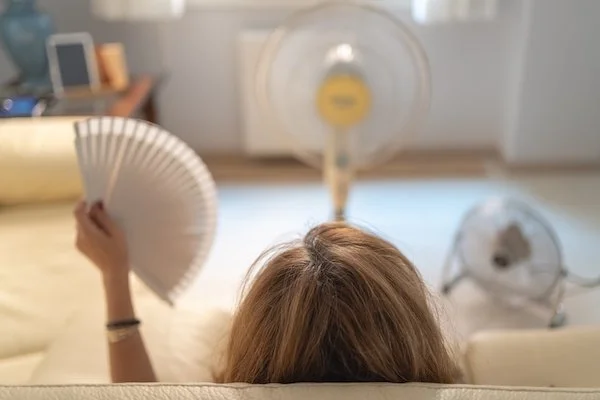
Oh, and layers! Dress in layers like an expert fashionista. That way, when a hot flash strikes, you can shed those unnecessary garments like a snake shedding its skin. And for those on-the-go hot flashes, invest in a portable fan. Whip it out like a secret weapon when the heat threatens to consume you.
If you want to unleash your full arsenal of weapons to fight the Heat Miser, you can try eliminating alcohol, spicy foods, and caffeine, but some may feel that hot flashes are punishment enough!
Smoking is another way to light up your insides, as does being overweight. Add in poor sleep habits, inactivity, and an unhealthy diet and just like your in-laws who live next door, you’ve just sent an open invitation for those hot flashes to visit you anytime! So, let's kick these issues to the curb and show those hot flashes who's boss. You got this!
Some women (like this blogger), have tried most of these techniques without any luck. But there’s good news! Christmas came early for those who have tried everything without luck—-until NOW!
The FDA has just approved Veozah, the first non-hormonal drug to tackle those dreaded hot flashes. Finally, a glimmer of hope for women suffering from moderate to severe episodes of spontaneous combustion! And how does this wonder drug work, you may ask? Well, it binds to and blocks the activities of the NK3 receptor, which plays a role in regulating our body temperature. Thank you, science!!
If you want to learn more about , estrogen therapy, Veozah and other strategies to deal with hot flashes and other menopause symptoms, reach out to the team at Evora and schedule a FREE 15-minute consult. Until then, stay cool, ladies, stay cool.
Why can't I lose weight?
Our understanding of obesity has changed over the last few decades. We used to think fat cells were just for storage. We now know that fat cells make oodles of hormones and other substances that affect our weight. Midlife is not kind to your middle. Losing weight is difficult. It isn’t all about calories in versus calories out, and it isn’t about a lack of willpower or laziness. It is about your body working against you.
Midlife is not kind to your middle. Losing weight is difficult. It isn’t all about calories in versus calories out, and it isn’t about a lack of willpower or laziness. It is about your body working against you. Of course, you should eat healthy, unprocessed food, and take part in physical activity. But even this doesn’t always work for weight loss.
It doesn’t work because as we lose weight our hunger hormones kick in at full speed. We are evolutionarily designed to eat. When we were hunter/gatherers this was protective. But not today when food is plentiful (and super processed). When your body needs energy, ghrelin is released from your gut and goes to your brain and tells your brain you are hungry. When you restrict your calories and lose weight, the amount of ghrelin you make increases, pushing you to eat and making you feel like you don’t have willpower. Each time you lose weight and then regain it, the amount of ghrelin you make in response increases, driving you to eat even more. This is one way that yo-yo dieting ultimately leads to more weight gain than when you started.
Our understanding of obesity has changed over the last few decades. We used to think fat cells were just for storage. We now know that fat cells make oodles of hormones and other substances that affect our weight. Fat cells make a hormone called leptin. Leptin tells our brain we are full. But in people with obesity, leptin doesn’t work like it should. People may become “leptin resistant” and sometimes the parts of the brain that control fullness don’t respond to leptin anymore. We can’t blame it all on leptin and insulin resistance. Executive function in the brain plays a role too. We have control over things like eating when we are stressed or not hungry, and we certainly have control over how much physical activity we are getting.
At midlife/menopause a variety of changes take place. Hormone levels of estrogen and testosterone are plummeting. As estrogen decreases, excess fat starts to go right to your belly instead of hips and bust like it did premenopause. As we age, we naturally lose muscle and gain fat. It isn’t clear how much of this is due to decreasing hormones and how much is due to aging. Either way, as we become fatter and lose muscle, our metabolism slows down. This means it takes fewer calories to run our body. If we are eating the same number of calories and exercising the same as we used to, over time, weight gain will ensue. Fortunately, strength training increases your metabolic rate causing you to burn more calories. Even five minutes here and there makes a difference. If you can’t find time to get to the gym, get some home weights and lift when you can.
At midlife, women are more likely to become insulin resistant. This means that their bodies must produce more insulin to get the same amount of glucose into their cells to use for fuel. Insulin is an anabolic hormone, and it tells your body to deposit fat. Left untreated, insulin resistance can become prediabetes and ultimately diabetes.
Weight loss can restore normal insulin levels. There are a variety of safe and effective medicines that work very well for weight loss in all women, but also in women with insulin resistance. These are called GLP-1 agonists. GLP-1 stands for glucagon like peptide. GLP tells your brain that you are full. A GLP-1 “agonist” acts like GLP and makes you feel full, in other words it is an appetite suppressant. It is not an amphetamine, so it isn’t addicting. GLP-1s also slow the rate at which food leaves your stomach, making you feel fuller for longer. There are several GLP-1s on the market and studies show excellent amounts of weight loss. Some GLP-1s are also cardioprotective, meaning they may lower your risk of heart disease. GLP-1s are also used to treat diabetes, so for people with insulin resistance, they restore insulin to normal levels.
Obesity is a disease. Just like high blood pressure is a chronic condition, so is obesity. But we do have the power to overcome it. If you are having trouble losing weight, don’t fall for quick fixes that promise rapid weight loss. There is no magic supplement that is going to make you lose weight. Find a doctor who understands obesity. Go to the Obesity Medicine Association to find a practitioner. Even a small amount of weight loss leads to big improvements in your health, not to mention, you feel good about yourself. Start feeling like yourself again today!
Becky Lynn, MD is a gynecologist and weight loss specialist in St. Louis. She sees patients in Missouri, Illinois, and Tennessee. If you are having trouble losing weight, schedule a free 15-minute consult with Dr. Lynn to see if she is the right fit for you.

Movement As Medicine
Most people consider exercise solely in the context of weight loss. Perhaps you’re also aware that exercise offers heart and brain benefits and can improve depression and anxiety. However, many people don’t recognize the numerous other health advantages exercise poses. Engaging in regular exercise can mean the difference between getting dementia and living in a nursing home at 65 or maintaining vitality and chasing after grandchildren at age ninety.
A potent form of natural medicine, learn how simple exercise can help slow down aging in this article.
How Exercise Can Slow Down Aging
Most people consider exercise solely in the context of weight loss. Perhaps you’re also aware that exercise offers heart and brain benefits and can improve depression and anxiety. However, many people don’t recognize the numerous other health advantages exercise poses. Engaging in regular exercise can mean the difference between getting dementia and living in a nursing home at 65 or maintaining vitality and chasing after grandchildren at age ninety.
A potent form of natural medicine, learn how simple exercise can help slow down aging in this article.
Different Types of Exercise
First, it’s important to understand the different types of exercise and their unique benefits. Engaging in multiple types of exercise on a regular basis promotes specific and favorable physiological adaptations that undoubtedly improve health, vitality and longevity.
Aerobic Training
Otherwise known as cardio, aerobic exercise boosts brain health and improves the entire cardiovascular system. Activities like walking, jogging, road cycling, swimming, hiking and the like literally help the brain create new neural pathways, help maintain nerve signaling, promote circulation and drainage and enhance lung function.
The American Heart Association recommends 150 min of moderate-intensity or 75 min of vigorous aerobic training per week to maintain health. That equates to about 30 min of moderate intensity exercise on five days of the week or 25 min of vigorous intensity exercise on three days of the week. Note that an average person would achieve about 1.5-2 miles in a half hour and only very high caliber athletes could maintain vigorous pace for 25 min at a time.
Other health and wellness sources suggest achieving 10,000 steps per day to maintain health. For the average person, this equates to walking five miles per day. This can feel daunting to those who feel like they can barely create 20 min to work out!
Interestingly, more recent research suggests that shorts bursts of cardio exercise along with natural movement mostly via walking during the day is plenty sufficient. Stay tuned to learn about the effectiveness of short bursts of energy otherwise known as high intensity interval training and why doing five HIIT sessions (aka doing 15 min on five days of the week to equal 75 min of vigorous intensity exercise) likely isn’t a great idea.
Anaerobic/Strength Training
Strength training involves working muscles against a force, be that body weight, dumbbells, bands or machines. The major benefit of resistance training is building lean body mass. Also called muscle, lean body mass is the most metabolically active type of tissue and helps you easily maintain a healthy weight.
It reduces inflammation and even assists in hormone balance. An abundance of research shows that those who continue strength training throughout life live longer and higher quality lives. Regular strength training that incorporates evidence-based progressive overload principles also helps maintain bone and joint health, which prevents falls and reduces hospital stays!
The American Heart Association recommends resistance training two days a week and exercising all major muscle groups (legs, hips, back, abdomen, chest, shoulders and arms).
Unlike the questionable cardio recommendations, this is a very sensible recommendation. However, those who include four or more days of strength training per week will incur double the benefit, especially when paired with plenty of natural movement throughout the day.
Circuit and HIIT Training
Despite being used interchangeably, circuit and HIIT training aren’t the exact same. High intensity interval training is one type of circuit training, but not all circuit training is HIIT.
In fact, the numerous boot camps, fat blasting, sorry-to-say-it but Orange Theory classes being advertised as HIIT are actually more like stress-inducing circuit training.
True HIIT training is no longer than 20 min max, including a short 5 min warmup. Meaning, a pure HIIT session is more like eight to fifteen minutes. The bursts of effort are four to twenty seconds and rest is variable, ranging from the remainder of the minute until the next burst to one or more minutes.
Some effective HIIT exercises include: burpees, sprints, bike or elliptical sprints, kettlebell swings and exercises, jumping and plyometric movements. This type of exercise increases metabolic rate for hours after completion and is therefore most effective at improving cardiovascular health and possibly reducing neurodegenerative disease as well. However, because it is so intense, it requires ample recovery in between sessions. Thus, the majority of people can tolerate two HIIT sessions per week (75 min of HIIT per week would likely raise stress hormones enough to counteract the benefit of this exercise).
All this isn’t to say circuit training doesn’t provide benefits. Circuit training is an effective way to maintain good health. It just doesn’t lead to the high caliber physiological adaptations like HIIT, nor the same ones as pure cardio or strength training.
In a sense, circuit training slightly confuses the body, again deeming it sufficient to maintain those already in pretty good health but not the best option for those looking to create significant metabolic shifts such as weight loss, insulin sensitivity or muscle hypertrophy.
Natural Physical Activity
The most underrated, forgotten form of exercise is simply natural movement. This is typically a very attainable and sustainable way to maintain health. It keeps the brain active, improves circulation, joints, bones, muscles, mood and more and is often quite fulfilling.
Natural movement includes anything from household chores to gardening or chasing kids to having an active job or walking to the coffee shop to dance parties and cleaning the house. It doesn’t need to feel forced and can simply be an awareness, dare we suggest fun!
7 Ways Exercise is Medicine To Slow Aging
1. Helps maintain lean body mass
Lean body mass tissue burns the most calories, bolsters bones and helps prevent falls. In addition, it improves the immune system by reducing systemic inflammation. Consistent strength training is truly vital for longevity.
2. Increases circulation
It’s important to train the aerobic system consisting of the heart, lungs and blood to efficiently deliver nutrients and oxygen to muscles and organs. Sluggish circulation can cause build ups, clots, eruptions and the like. Poor cardiovascular health also greatly reduces the quality of life, making all other movement more taxing and tiring, impeding breathing and sometimes sleep and increasing the risk for mood disorders.
3. Rejuvenates the brain
All types of exercise enhance brain health and help maintain optimal function. Exercise induces creation of new neural pathways that promote memory and reduces risk of dementia, Alzheimers and Parkinsons among other chronic diseases like cancer and metabolic syndrome. If that weren’t impressive enough, exercise also increases activity in areas of the brain related to mood regulation and is (hopefully) prescribed as first line treatment.
4. Improves insulin sensitivity
Insulin resistance is common, especially amongst menopausal women. It causes systemic inflammation and makes weight loss extremely difficult, frustrating and confusing for many who feel like they’re doing everything right to no avail.
Thankfully, all kinds of exercise help maintain insulin sensitivity and reduce the risk of diabetes, cardiovascular disease and metabolic syndrome.
Blood sugar regulation is at least one of the type five best predictors of longevity and vitality and is dependent upon maintaining insulin sensitivity.
5. Improves lymphatic drainage
Lymph nodes are only one small part of the entire lymphatic system, which is a complex system that helps maintain fluid balance by filtering blood plasma via interstitial fluid.
The important aspect to know is a healthy lymphatic system bolsters the immune system, reduces autoimmunity, prevents gut imbalances, promotes skin health and reduces systemic inflammation.
Activities that promote lymphatic drainage include: dry brushing, rebounding, facial massages, body massages, lymphatic drainage massages and drinking plenty of hydrating fluids rich in minerals like salt, potassium, magnesium and copper.
6. Bolsters mental health and mood
As has been mentioned, most types of exercise besides super stressful/intense exercise too often improves mental and emotional health. It contributes to brain mechanisms that regulate mood and has been shown to increase subjective measures of health like self confidence, efficacy, and esteem. For some, it offers fulfillment or gratitude or freedom.
Not to mention, the health benefits of engaging in outdoor and/or group physical activity. There are additional health benefits to exercising and regularly getting outdoors and to working out with friends. In fact, working out with others has been shown to increase motivation, accountability and consistency of exercise.
7. Mitigates age-related illnesses
Finally, thanks to all the above health enhancements, exercise is simply wonderful medicine for reducing the instance and/or severity of a host of chronic diseases and conditions including:
Metabolic syndrome
Type II diabetes
Autoimmune diseases
Cardiovascular disease
Stroke
Some cancers
IBS
Osteoporosis
Falls
Obesity
Menopause
So be sure to get out an exercise and set yourself on a path to living longer!